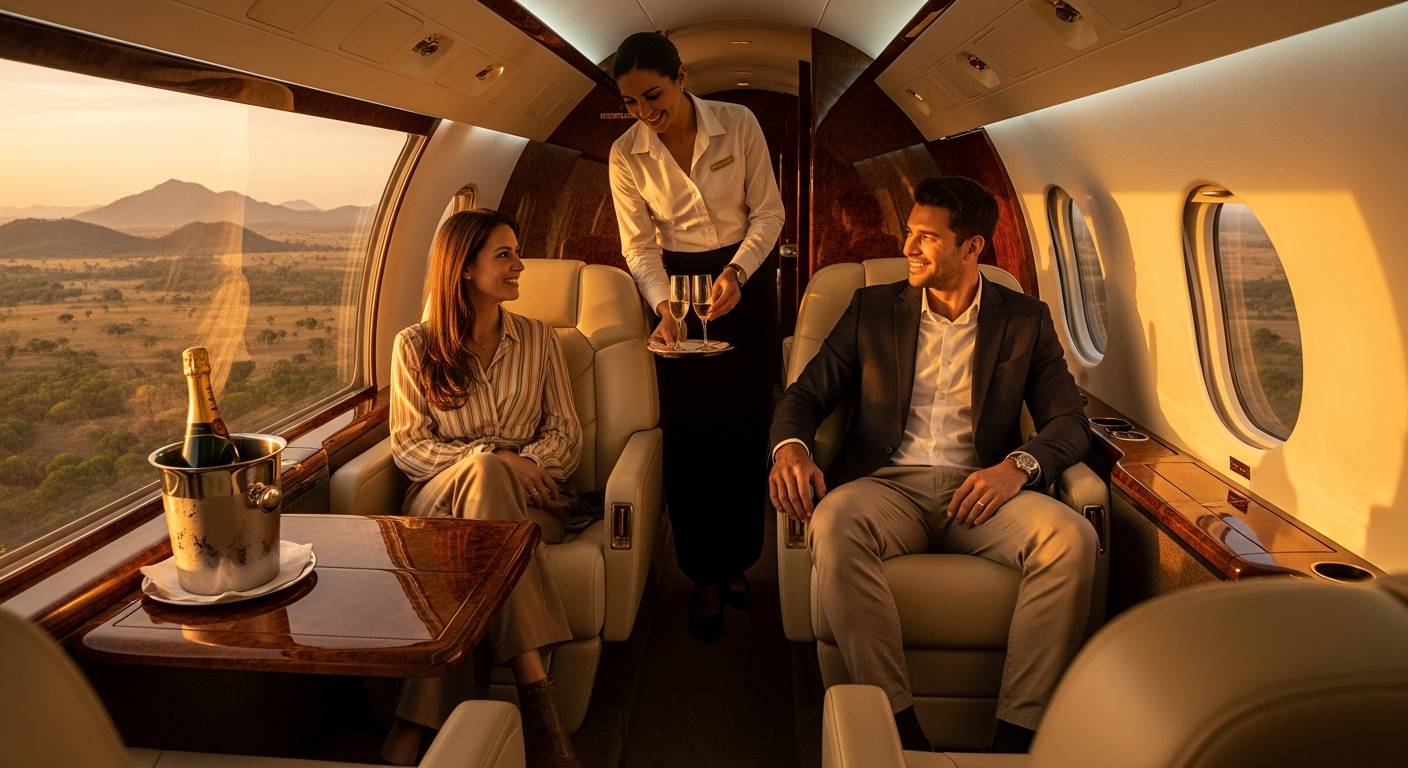
The Pilatus PC-12 descends, its shadow tracing the coastline as Sumba’s rugged savanna unfolds below. This arrival marks not just a journey’s end, but an immediate immersion into an island defined by ancient traditions and an understated luxury accessible only by direct flight.
The Indispensable Sumba Private Jet Advantage
Sumba, an island east of Bali, presents a distinct proposition for the ultra-high-net-worth traveler. Its allure lies in its profound authenticity, from the megalithic tombs dotting the landscape to the vibrant horse culture of the Pasola festival. Commercial air travel, with its multiple connections and unpredictable schedules, often detracts from this exclusive experience. A Sumba private jet charter transforms the journey into an extension of the destination’s luxury, offering direct flights and unparalleled efficiency. From Bali’s Ngurah Rai International Airport (DPS), a private jet reaches Sumba in approximately one hour, covering a distance of around 400 kilometers. This contrasts sharply with commercial routes that typically involve layovers, extending travel time significantly.
For those originating from Jakarta’s Soekarno-Hatta International Airport (CGK), the direct flight duration is approximately 3.5 hours, providing a swift passage across Indonesia’s archipelago. This time-saving is critical for clients where every hour holds substantial value, whether for a crucial family office due-diligence trip concerning a private island acquisition or for a time-constrained honeymoon. The ability to dictate departure times, select preferred aircraft, and bypass public terminals ensures a level of privacy and comfort that commercial aviation cannot match. This direct access serves both Sumba’s main airports: Tambolaka (TMC) in West Sumba and Waingapu (WGP) in East Sumba, ensuring proximity to specific destinations like Nihiwatu Resort, which is 45 minutes from TMC. The average private jet charter cost for a light jet from Bali to Sumba starts at around $6,000 USD, reflecting the bespoke service.
Navigating Sumba’s Airfields: Tambolaka (TMC) and Waingapu (WGP)
Sumba is served by two primary airports, each providing strategic access to different facets of the island: Tambolaka Airport (TMC) in West Sumba and Umbu Mehang Kunda Airport (WGP) in Waingapu, East Sumba. Understanding their capabilities and limitations is paramount for seamless private jet operations. Tambolaka (TMC) is the preferred gateway for travelers heading to the acclaimed Nihiwatu Resort and the exclusive Lelewatu Resort, both situated in West Sumba. TMC features a runway designated 06/24 with an asphalt surface, measuring 2,500 meters (8,202 feet) in length. This length accommodates a wide range of private jet aircraft, from light jets like the Cessna Citation CJ3 to mid-size jets such as the Gulfstream G150, and even some super mid-size jets, depending on weight and weather conditions.
Waingapu (WGP) serves the eastern part of the island, offering access to its distinct cultural sites and surf breaks. Its runway, designated 16/34, is also asphalt and measures 2,000 meters (6,562 feet). While slightly shorter than TMC, WGP can still handle most light and mid-size private jets. Both airports operate under Indonesian civil aviation regulations and require specific permits for private jet landings. Ground handling services, while available, are not as extensive as major international hubs and often necessitate prior arrangement through experienced charter operators. Fuel availability (Jet A-1) is generally reliable, but pre-ordering is advisable for larger uplift requirements. Customs and immigration procedures for international arrivals via private jet are streamlined at both locations, requiring passenger manifests and crew details in advance, typically 48 hours prior to arrival.
Chartering Your Sumba Private Jet: Aircraft Selection and Operational Expertise
Selecting the appropriate aircraft for a Sumba private jet charter involves a strategic assessment of passenger count, range, luggage requirements, and the specific operational capabilities of Tambolaka (TMC) and Waingapu (WGP) airports. For shorter routes, such as from Bali (DPS), a light jet like a Cessna Citation M2 or a Embraer Phenom 300 offers efficiency and comfort for 4-7 passengers. These aircraft typically cruise at speeds of 700-800 km/h. For longer flights from Jakarta (CGK) or Singapore (WSSS), a mid-size jet like a Bombardier Learjet 60XR or a Gulfstream G150, seating 7-9 passengers, provides extended range and enhanced cabin amenities, including stand-up cabins and enclosed lavatories.
For larger groups or those requiring ultra-long-range capabilities from further afield, such as Australia or Hong Kong, a super mid-size or heavy jet like a Dassault Falcon 900LX or a Bombardier Global Express is ideal. These aircraft offer intercontinental range (up to 12,000 km) and spacious cabins with multiple zones. Beyond the aircraft itself, the operational expertise of the charter company is paramount. Leading operators adhere to rigorous safety standards, holding certifications such as the International Standard for Business Aircraft Operations (IS-BAO) Stage II or III, or ARGUS Platinum ratings. These certifications, recognized globally, signify adherence to best practices in safety management, maintenance, and crew training. Pilots flying to Sumba possess specific experience in Indonesian airspace and often have logged hundreds of hours flying similar routes. Maintenance protocols follow strict manufacturer guidelines, with scheduled inspections and repairs performed by certified technicians, ensuring optimal aircraft performance and reliability.
Sumba Private Jet Charter: Process, Regulations, and Bespoke Logistics
The process of arranging a Sumba private jet charter is a refined exercise in bespoke logistics, where precision and foresight are key. It begins with a detailed client consultation to ascertain specific travel requirements: departure and arrival points, passenger count, desired aircraft type, and any special requests. Once an aircraft is selected, the operator initiates the intricate permitting process. For flights within Indonesia, domestic flight permits are required, typically obtained within 24-48 hours. International private jet flights into Sumba, from hubs like Singapore Changi (WSSS) or Perth (YPPH), necessitate overflight clearances from Indonesian Air Traffic Control and landing permits from the Directorate General of Civil Aviation. These international permits can take 3-5 business days to secure, underscoring the importance of advance planning.
Ground handling at Tambolaka (TMC) and Waingapu (WGP) is coordinated meticulously. This includes securing ramp space, arranging aircraft fueling (Jet A-1), and facilitating VIP ground transfers. For Nihiwatu guests, this often involves a direct, air-conditioned vehicle transfer from the tarmac to the resort, a drive of approximately 45 minutes from TMC. Customs and immigration for private jet passengers are expedited, with officers often meeting the aircraft directly upon arrival. This avoids the delays associated with commercial terminals. Bespoke services extend to in-flight catering, which can be tailored to individual dietary preferences or specific culinary desires, from gourmet meals prepared by a Michelin-starred chef to a selection of fine wines. On-board connectivity via satellite Wi-Fi ensures business continuity or entertainment throughout the flight. The total coordination ensures a seamless transition from global departure to Sumba’s pristine shores.
Sumba’s Exclusive Destinations: Nihiwatu, Lelewatu, and Private Island Access
Sumba’s appeal to the UHNW traveler is intrinsically linked to its exclusive destinations, each offering a unique facet of luxury and immersion. The Sumba private jet serves as the direct conduit to these experiences. Nihiwatu Resort, consistently ranked among the world’s top hotels, epitomizes the “Edge of Wildness.” Located on the southwestern coast, it spans 567 hectares of pristine land, featuring 28 villas with private pools. Guests engage in world-class surfing at Occy’s Left, Mandara Spa treatments, and the unique Nihi Sumba horse-culture experience. The resort’s commitment to the Sumba Foundation, which supports local health and education initiatives, provides a layer of philanthropic engagement for guests.
Lelewatu Resort, situated on a dramatic clifftop overlooking the Indian Ocean, offers another level of privacy and refined elegance. Its 27 villas are designed with traditional Sumbanese elements and expansive ocean views. It caters to those seeking solitude and unparalleled natural beauty, often chosen by honeymooners or couples desiring an undisturbed retreat. Beyond established resorts, Sumba also attracts family offices and investors considering private island acquisition. A private jet facilitates discreet due-diligence trips, allowing swift access to remote sites and direct engagement with local stakeholders, minimizing public exposure. The Pasola Festival, an ancient ritualized spear-fighting event held annually in February or March, draws VIPs and cultural enthusiasts. A private jet ensures timely arrival for this significant cultural pilgrimage, offering a privileged vantage point to witness a tradition that dates back centuries, often involving hundreds of horsemen.
The Unseen Benefits: Time, Privacy, and Unrivalled Sumba Immersion
The decision to utilize a Sumba private jet extends beyond mere transportation; it represents an investment in time, privacy, and the quality of the overall Sumba experience. For business leaders and family office representatives, time is the ultimate commodity. A private jet eliminates the inefficiencies of commercial travel—check-in lines, security queues, and connecting flights—transforming hours of transit into productive or restful periods. The journey from Singapore (WSSS) to Tambolaka (TMC), for example, can be completed in under four hours directly, compared to a full day or more via commercial routes involving multiple stops. This allows for more focused engagement on due-diligence trips, maximizing time on the ground for critical assessments of potential private island acquisitions or investment opportunities.
Privacy is another cornerstone of the private jet experience. For high-profile individuals, celebrities, or families seeking undisturbed travel, the private terminal environment and exclusive cabin space offer discretion. This is particularly valuable for honeymoons at resorts like Lelewatu, ensuring an intimate start to a significant life event, or for families traveling with young children, providing a controlled and comfortable environment. Arriving refreshed and unburdened by travel fatigue allows for immediate, full immersion into Sumba’s unique cultural landscape. The island, with its distinct Marapu religion and traditional villages like Ratenggaro, offers profound cultural encounters. A private jet ensures guests are ready to engage with these experiences, whether it’s exploring ancient stone graves or witnessing the intricate weaving of Sumbanese ikat textiles, without the preceding stress of a complicated journey. This seamless transition enhances the entire Sumba sojourn, making every moment on the island more meaningful.
We invite you to discover the definitive way to experience Sumba. For bespoke travel arrangements and to discuss your Sumba private jet charter, visit our homepage at sumbaprivatejet.com or explore our dedicated insights on luxury travel to the region.